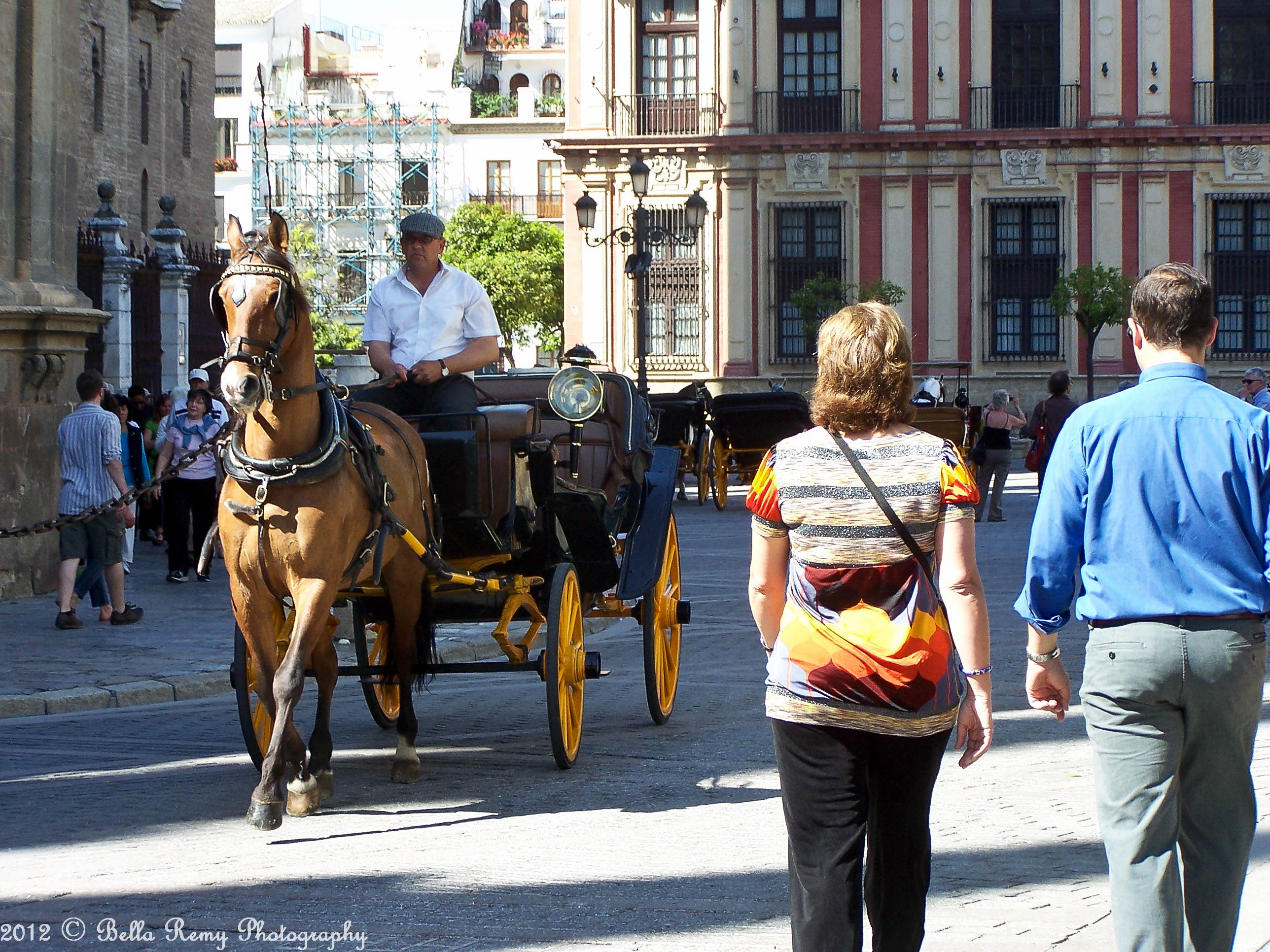
In the Andalusian region of Southern Spain along the Guadalquivir River lies a town steeped in ancient history and is alive today with Matadors and Flamenco women. With its footprints dating back over 3,000 years, Seville is now the fourth largest city in Spain with nearly one million residents.
It is fabled that the founder of Seville was Hercules and subsequent residents of this site included Romans, Moors and Conquistadors. Because of Seville’s location along the Guadalquivir River, Seville was the entry point for goods and services into Spain. There are several “must-see’s” in Seville, the Alcazar and the Santa Maria Cathedral where remains of Christopher Columbus are held.
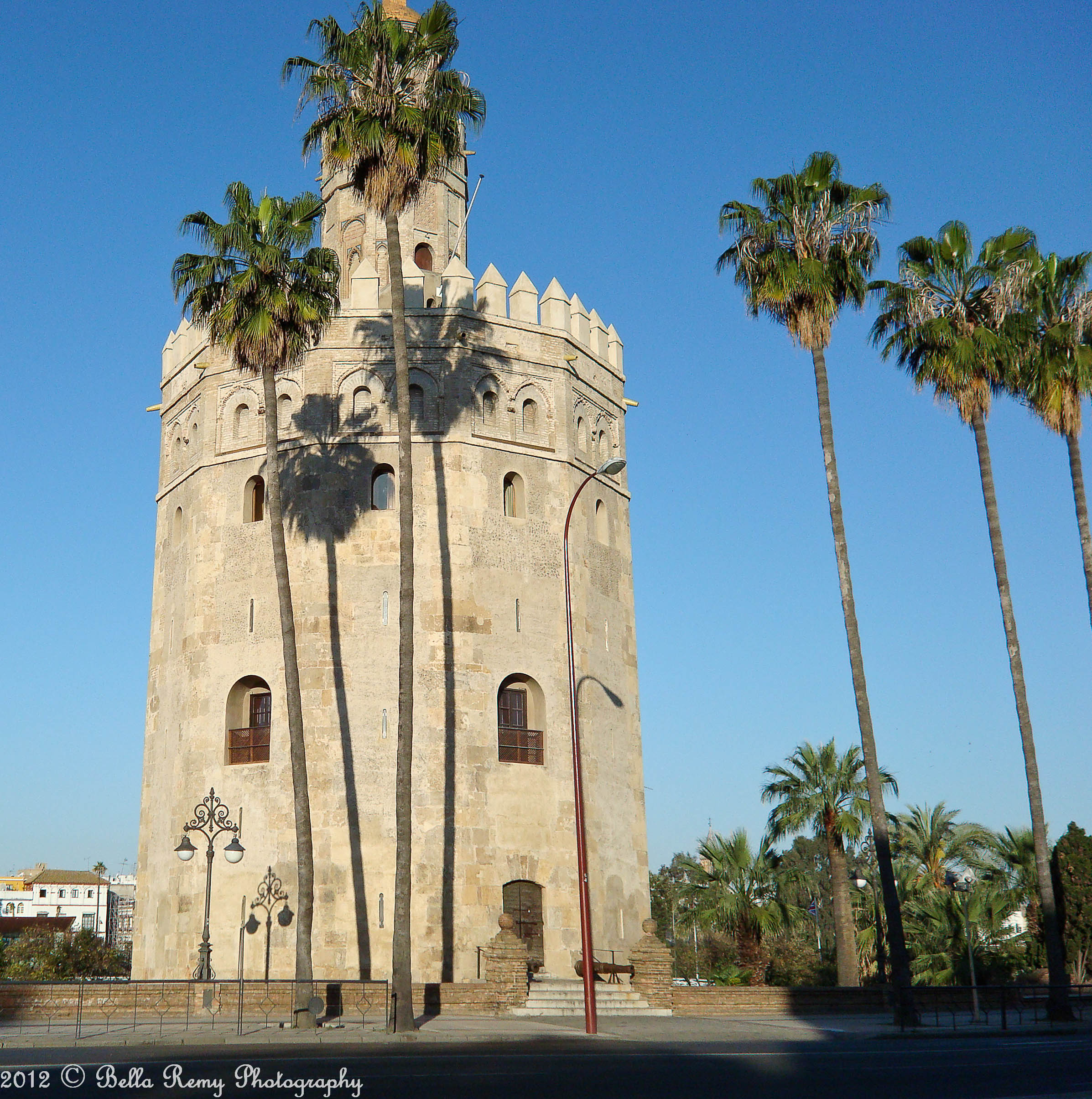
My friend and I had traveled to Southern Spain to learn how to ride Andalusian horses. After a wonderful week of fancy dressage movements we had an overnight in Seville before returning home. We had decided to drive in on a Friday afternoon. Not thinking of rush hour and completely unaware that it was Bull Fight night we drove in during the craziest part of the day. We already had limited time to visit Seville and had arranged a private guide to maximize our time in the expansive Alcazar.
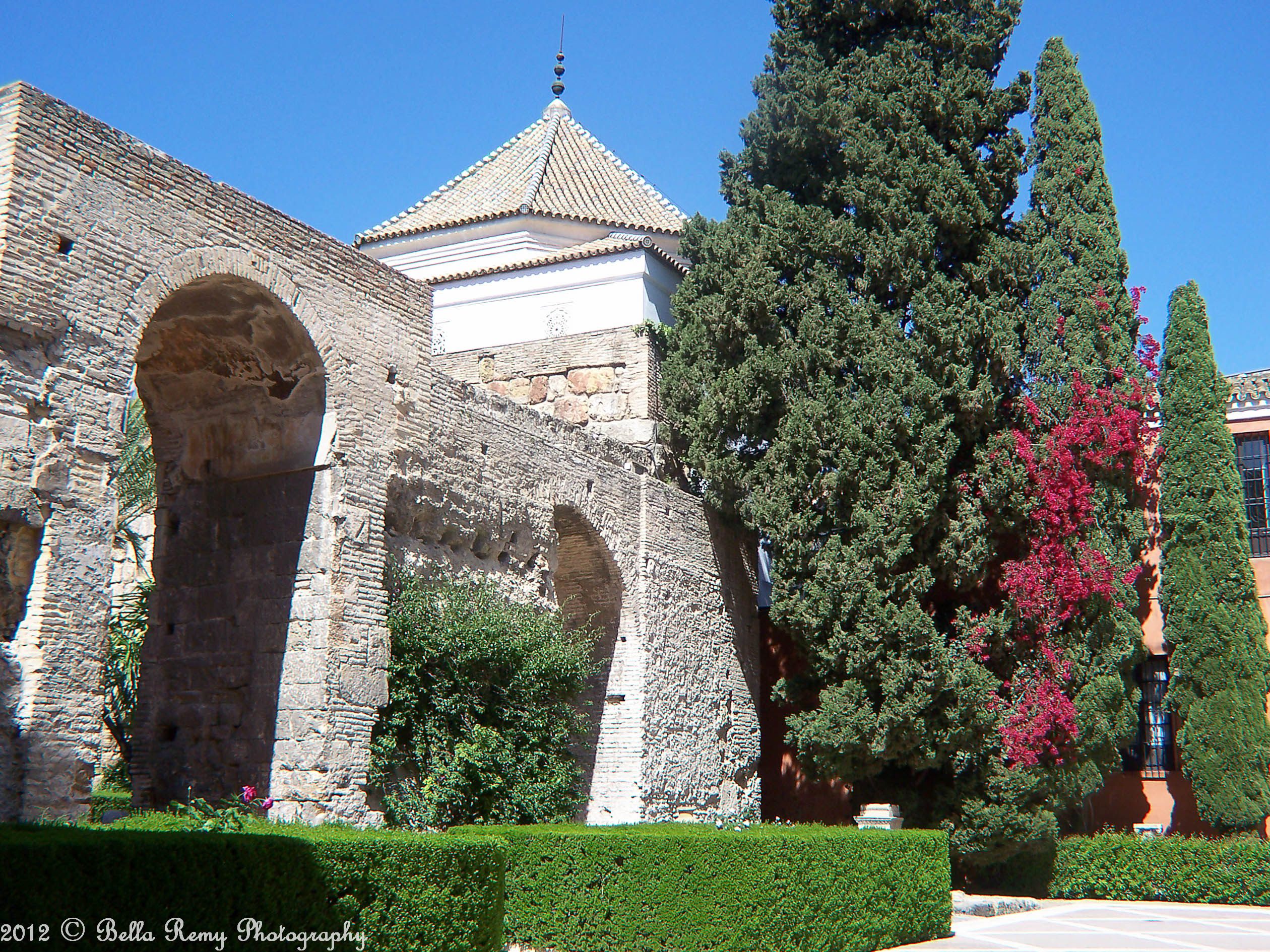
Naturally, as Americans we hustled as fast as we could over to the Alcazar to meet with our guide. The Alcazar is a royal palace and was originally a fort for the Moors. Even today the Spanish royalty use the upper levels of the Alcazar as a residence. The Alacazar is unique in the sense that several different cultures built and put their touch on the buildings and gardens. This courtyard demonstrates three different styles and time periods of construction from Islamic to Neoclassical.
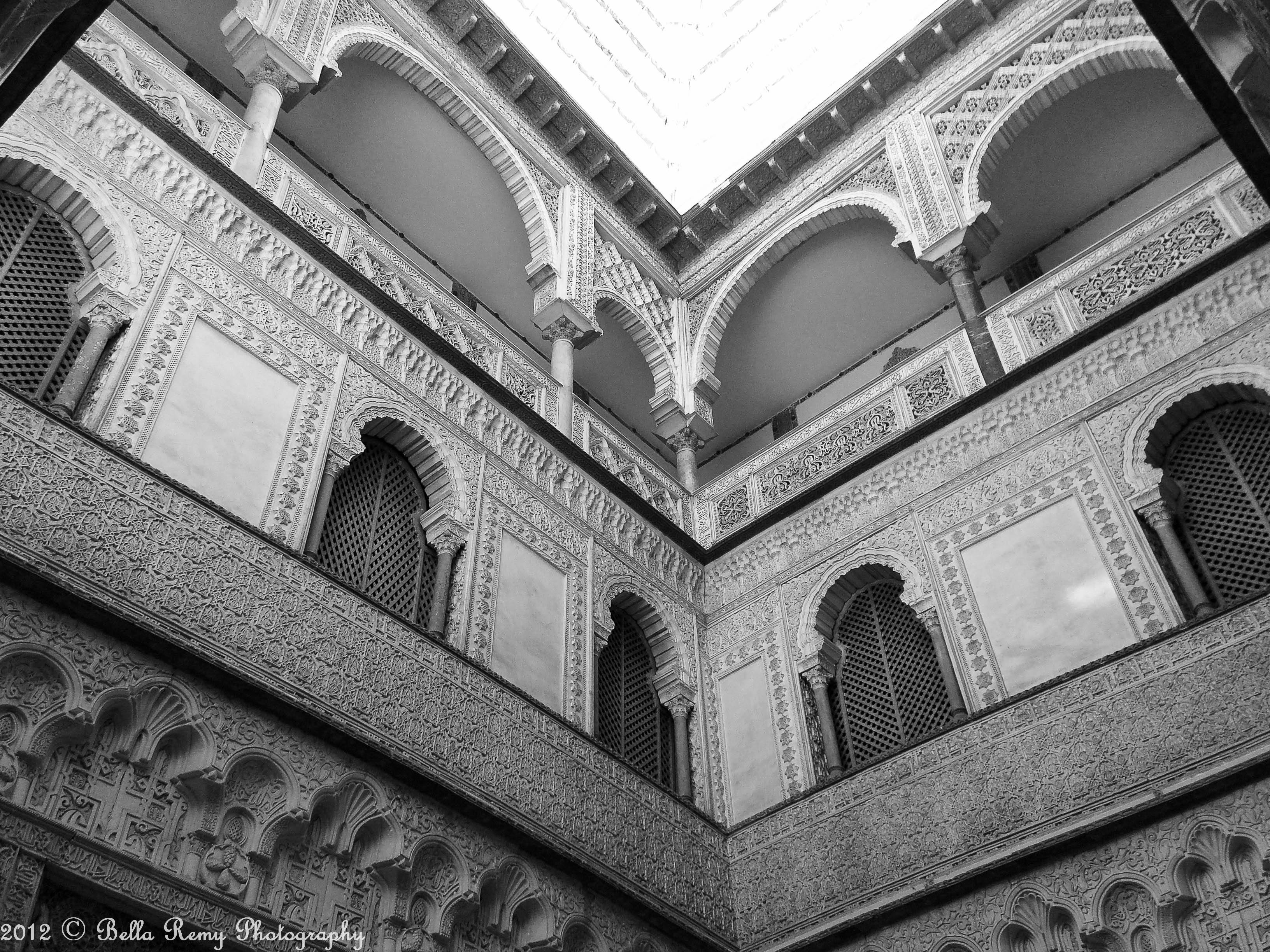
The Patio de los Doncellos meaning the “Courtyard of the Maidens” is said to be where the 100 virgins were held that the Moors demanded from the Iberians for an annual tribute.
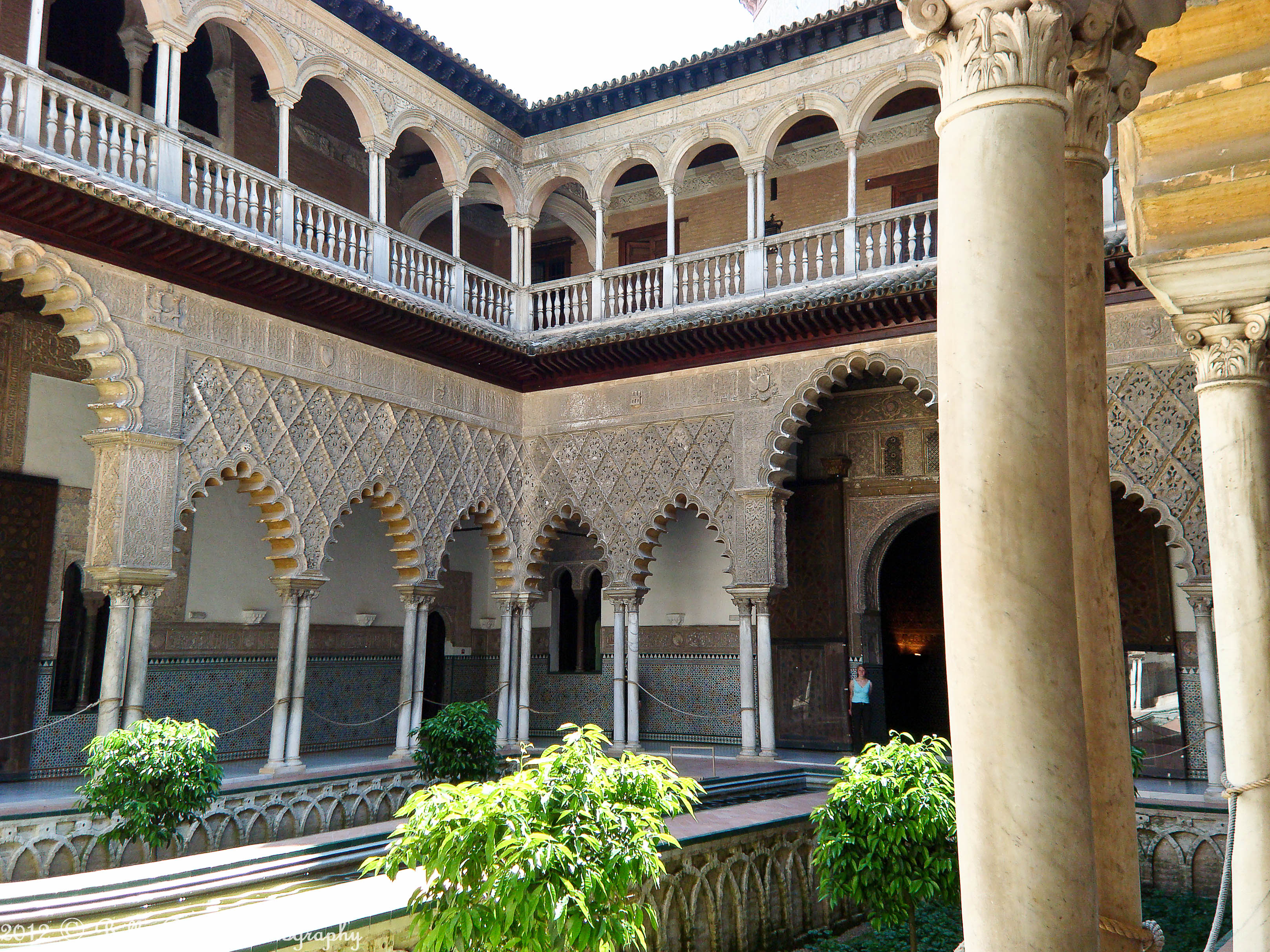

To say that one needs at least a day to visit the Royal Alcazar is actually not enough. One would need an entire week to go through this magnificent palace and stroll its gardens. The Gardens at the Alcazar were designed to be self-sustaining. Ideally, the gardens would be able to support the royal household should they need to remain within its walls.


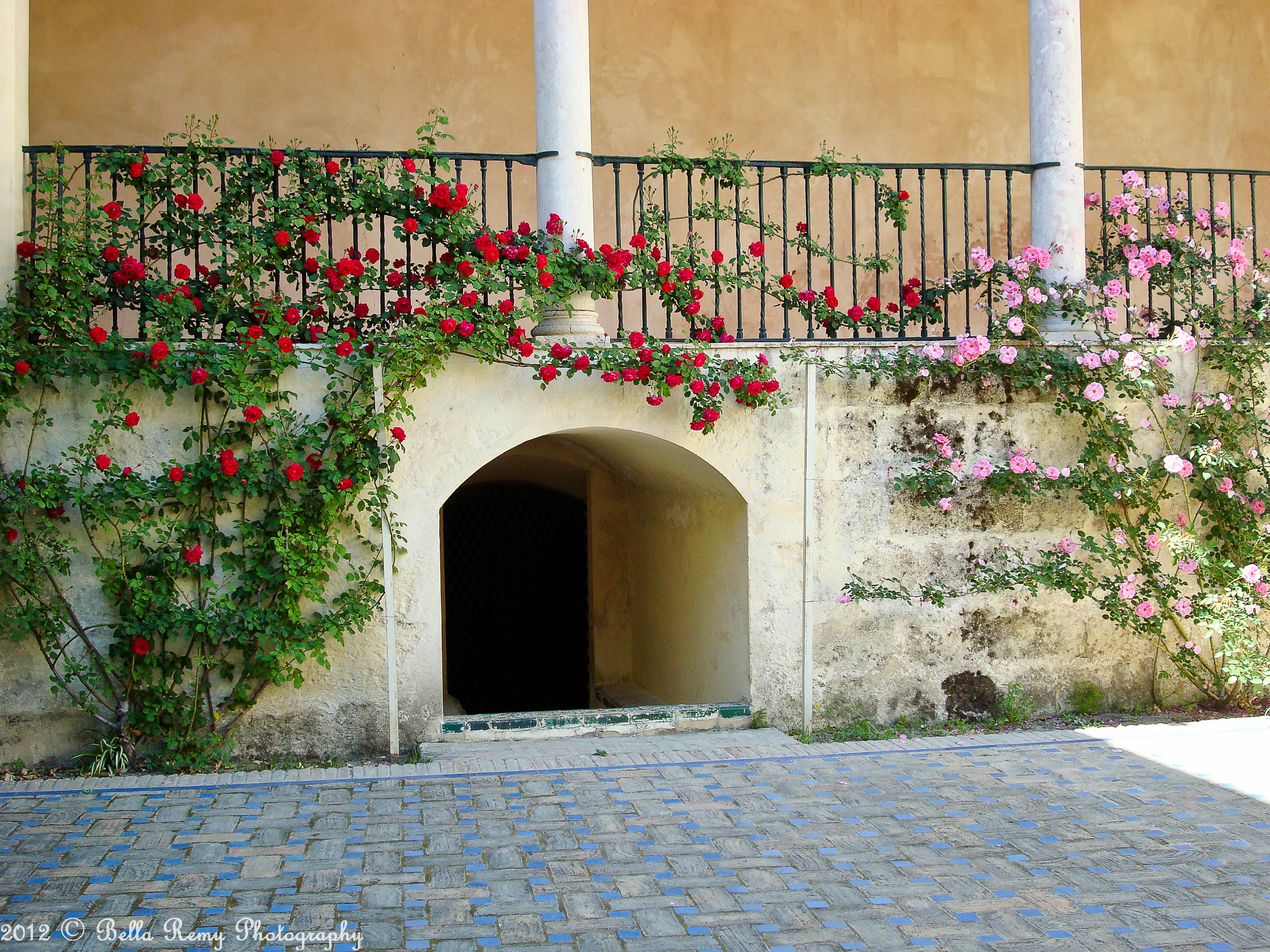

But as you’ve read…we were Americans on a tight schedule. We still needed to get to the Santa Maria Cathedral before it closed as I wanted to see Christopher Columbus’s tomb. So we headed out of the Alacazar and walked to the Cathedral.
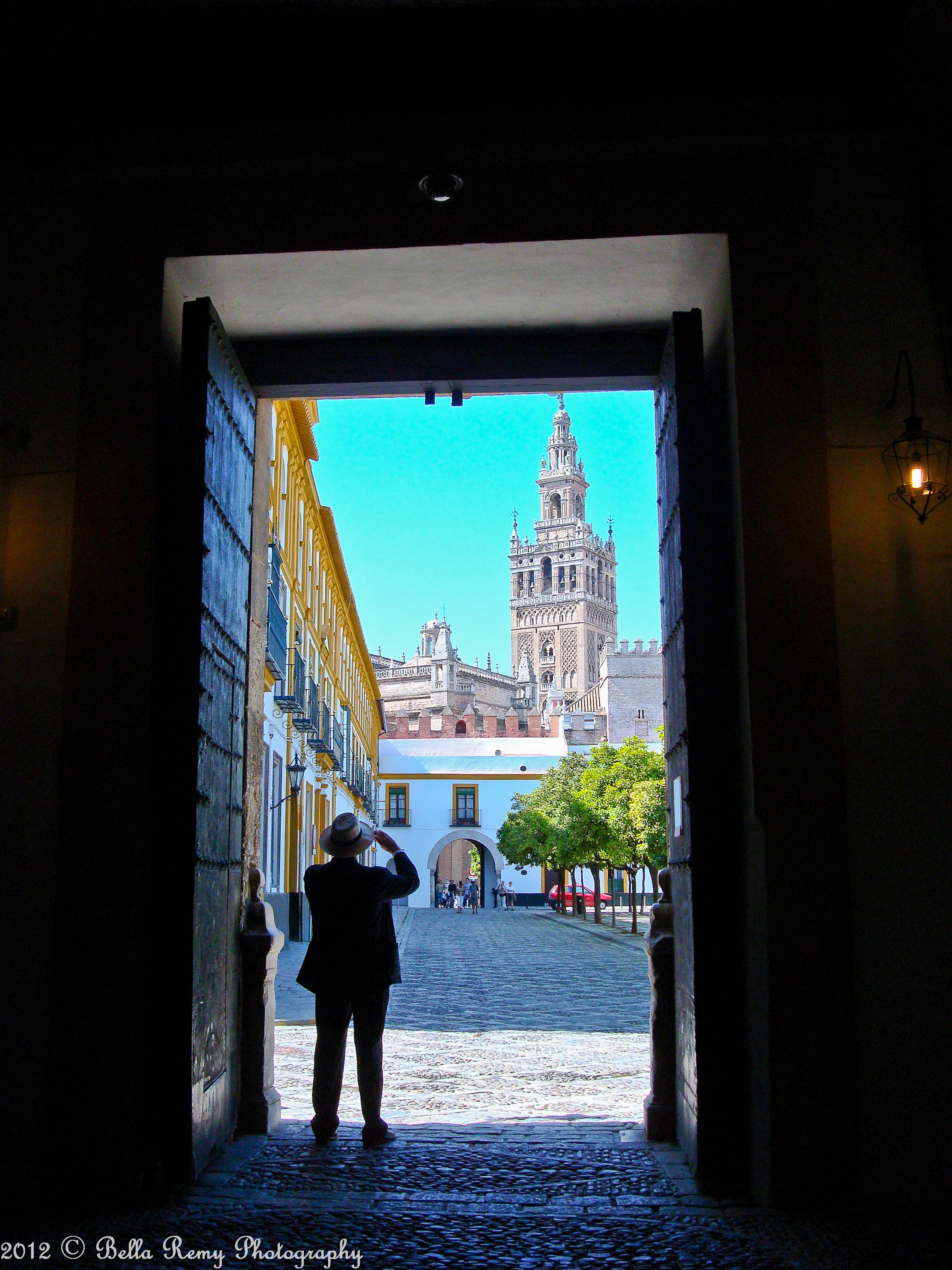
The Santa Maria Cathedral is extraordinary and it was interesting to learn of the Catholic mass services in previous times. The church is designed so that there is a “seeing” gallery and a “hearing” gallery. Only royal subjects were allowed to see the Bishop while the common person could “hear” the mass.
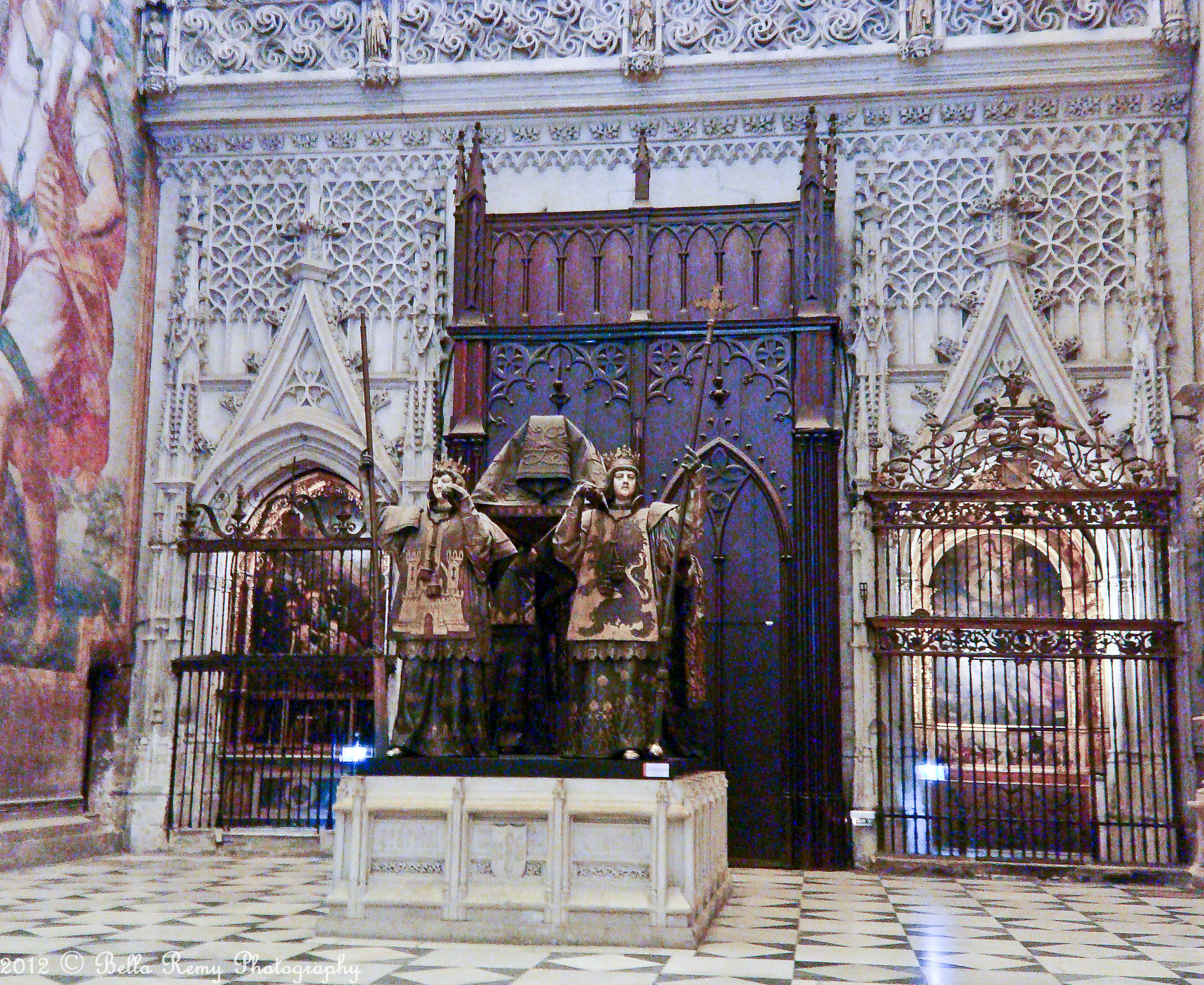
For a man who traveled so much during life, Christopher Columbus also traveled after his death in 1506. First buried in Seville, his remains were moved to the Santo Domingo Cathedral in the Dominican Republic 20 years after his death. In 1795, when Spain lost the Dominican Republic to France, Columbus was moved to Havana, Cuba. His remains were then returned to Seville in 1898. However, it was learned that not all of Christopher Columbus made it back to Spain. DNA testing in 2006 confirmed that the remains in the tomb at the Santa Maria Cathedral is indeed Christopher Columbus. However, there are still remains in the Dominican Republic who claim that they are of Columbus.
Because Christopher Columbus had fallen out of favor with the Spanish Royalty, his tomb is held high by knights who represent the four regions of Spain: Castile, Aragon, Leon and Navarre. Thus, his remains are not on Spanish soil.
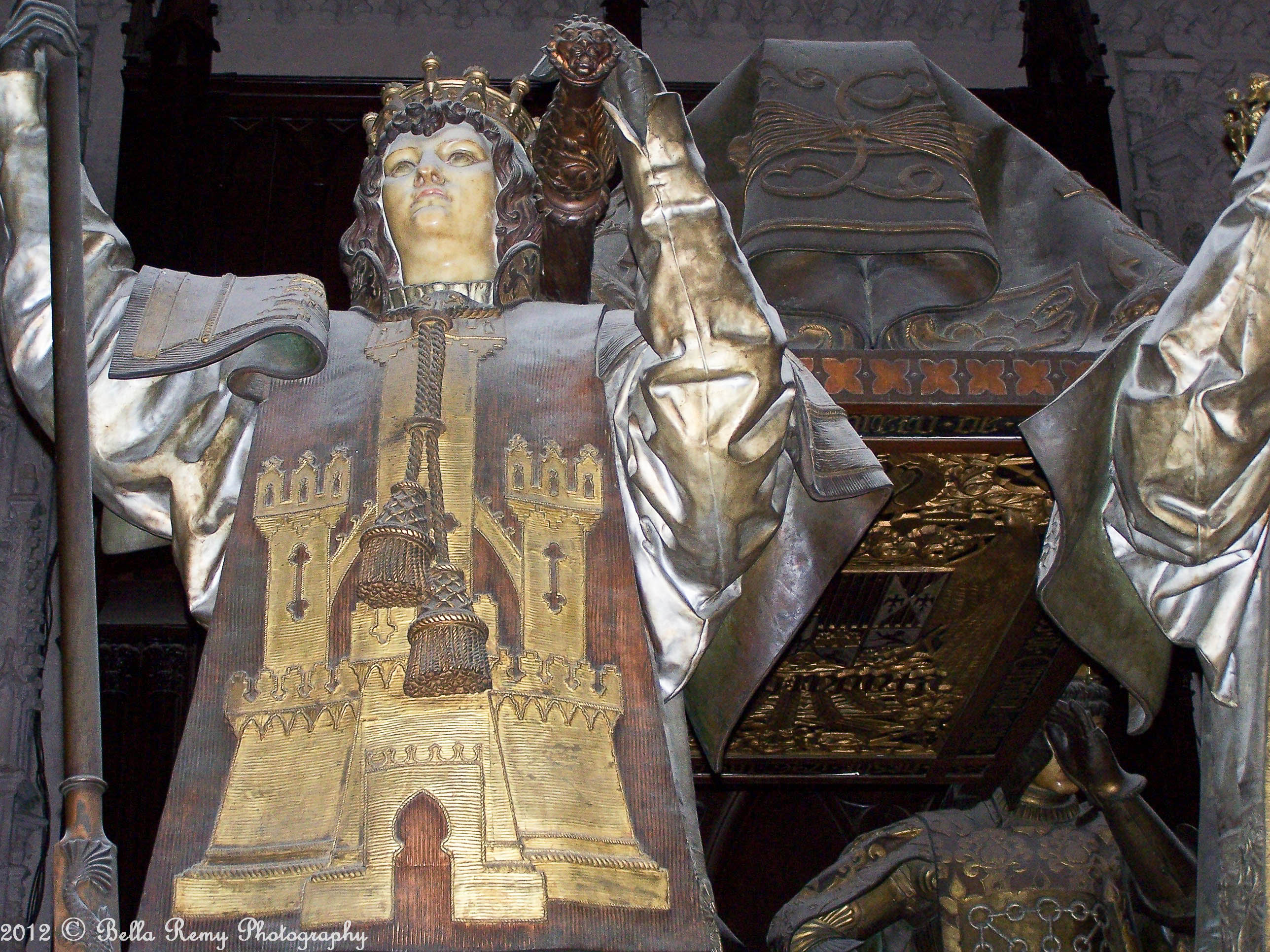
After paying our respects to Christopher Columbus and his great discovery of the new world, my friend and I left to begin walking the streets of Seville. Power walking as Americans do, we quickly noticed that we were passing a lot of Sevillians. We finally realized that what we needed to do is work on our “strolling.” So with great effort we began to slow our pace and started to truly enjoy our last night in Andalusia, Spain.

Categories: Foot Prints, Spain


 Emily Carter ~ Nature as Art
I enoyed the photos (esp those in high light contrast), the narrative, and the one with the man at the door. I used to live in Spain and brought back some memories. Great post.
Thanks Alex ! I had no idea you had lived in Spain. Where? It is such a fabulous country.
I lived in Madrid, travelled to Granada, Valencia, Segovia, Salamanca and Barcelona. I just love the country, people and food.
Oh the food..it is marvelous isn’t it? I went to Valencia to see the Lladro factory. Very cool.
Glad you had a great time there. Food – to die for! Probably that’s way my first blog was on Spanish food.
Amazing photos. I love the one of the little girl at the fountain.
Thank you so much Shannon ! Really, the girl does make the story doesn’t she?
Definitely. Great job as always!
Awwww…THANK YOU!!!
Reblogged this on Spanish Heritage Club.
Thanks for the history lesson about Christopher Columbus’ remains.
Beautiful photos and a great storyline! I really enjoyed reading and taking a little trip!
Thank you so much Michael! I hope you have a wonderful weekend.
You too – and a Happy Easter!
What an AMAZING Place – beautiful photos – thanks for sharing!