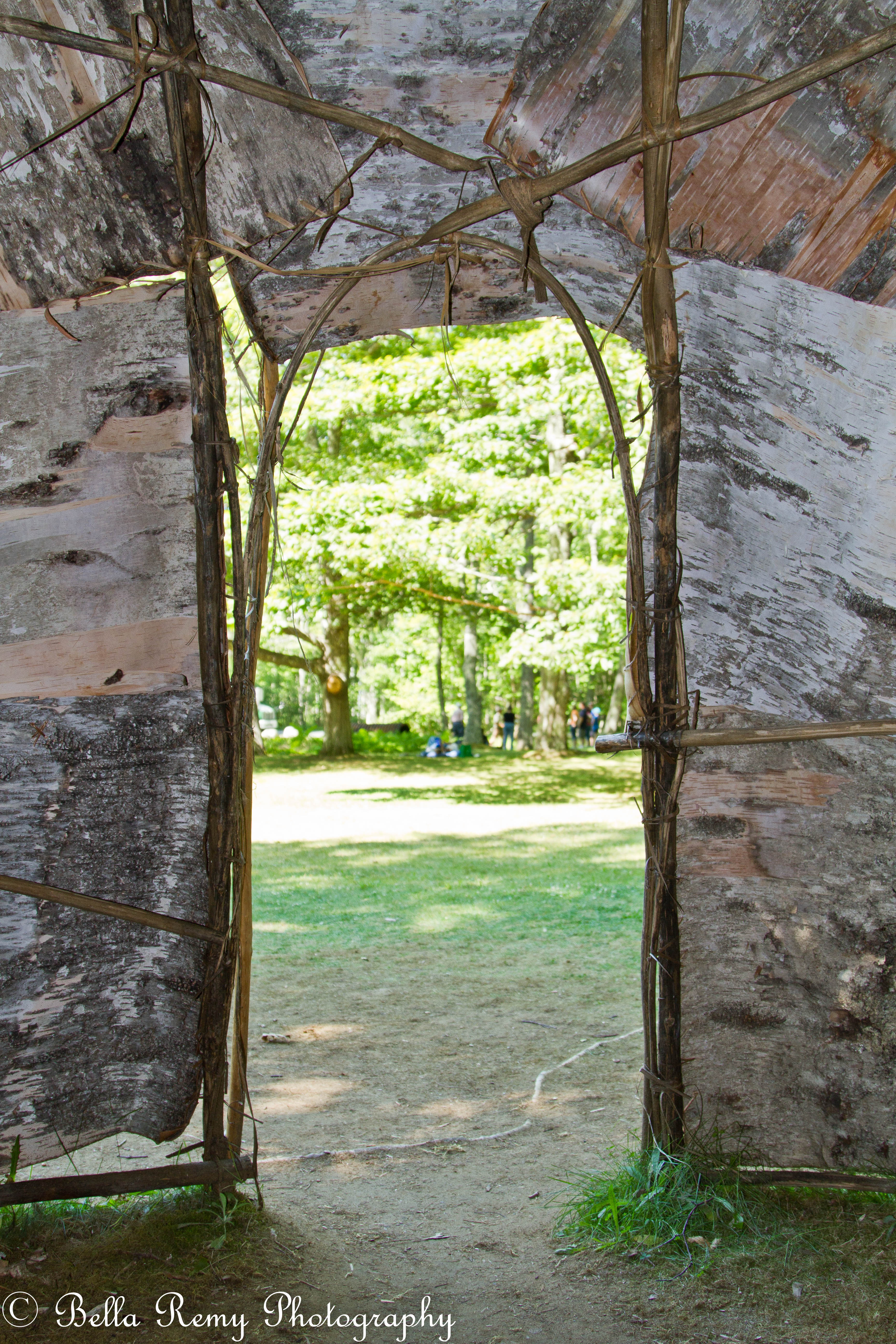
Nestled under the trees on the lawn of the visitors center of The Wild Gardens of Acadia sits this beautifully crafted Indian hut. This authentic birchbark WigWam was built by former Penobscot Nation Chief and master birchbark artist Barry Dana and a group of children from the Penobscot Nation Boy and Girls Club.
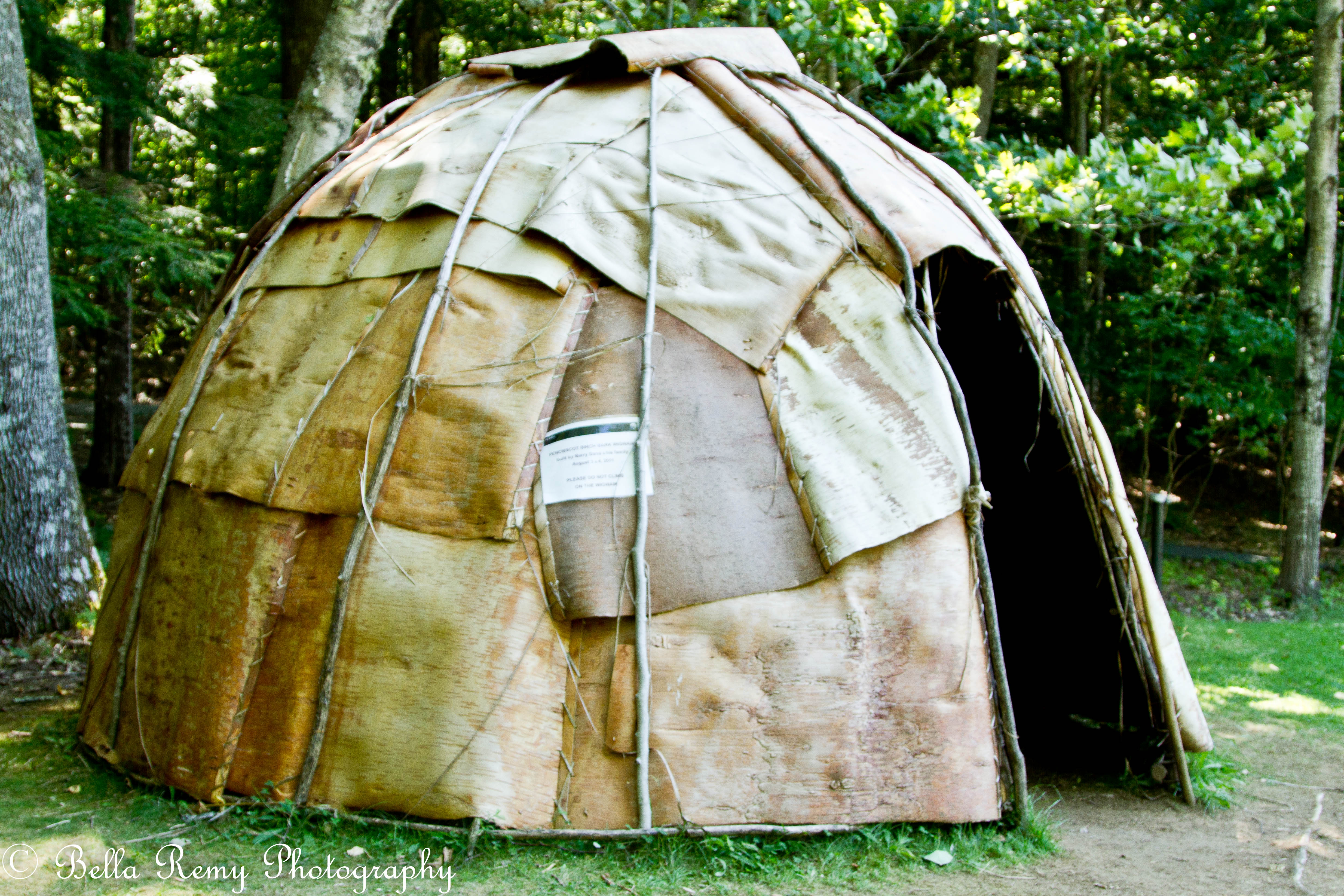
The birchbark wigwam was central to Maine Indian life, providing shelter and structure. Bark from the paper birch tree was the fabric of life in the region, offering materials to make everything from containers, to rain gear, to canoes. Maine Wabanaki material culture traditions have been passed down from generation to generation through hands-on learning and working with others, perfecting each step in the process until they can complete each one successfully. (Source: http://umaine.edu/news/blog/2010/07/28/penobscot-birchbark-artist-to-build-wigwam-at-the-hudson-museum/)
In the center of the wigwam structure is a ventilated hood so that smoke from small fires could escape.
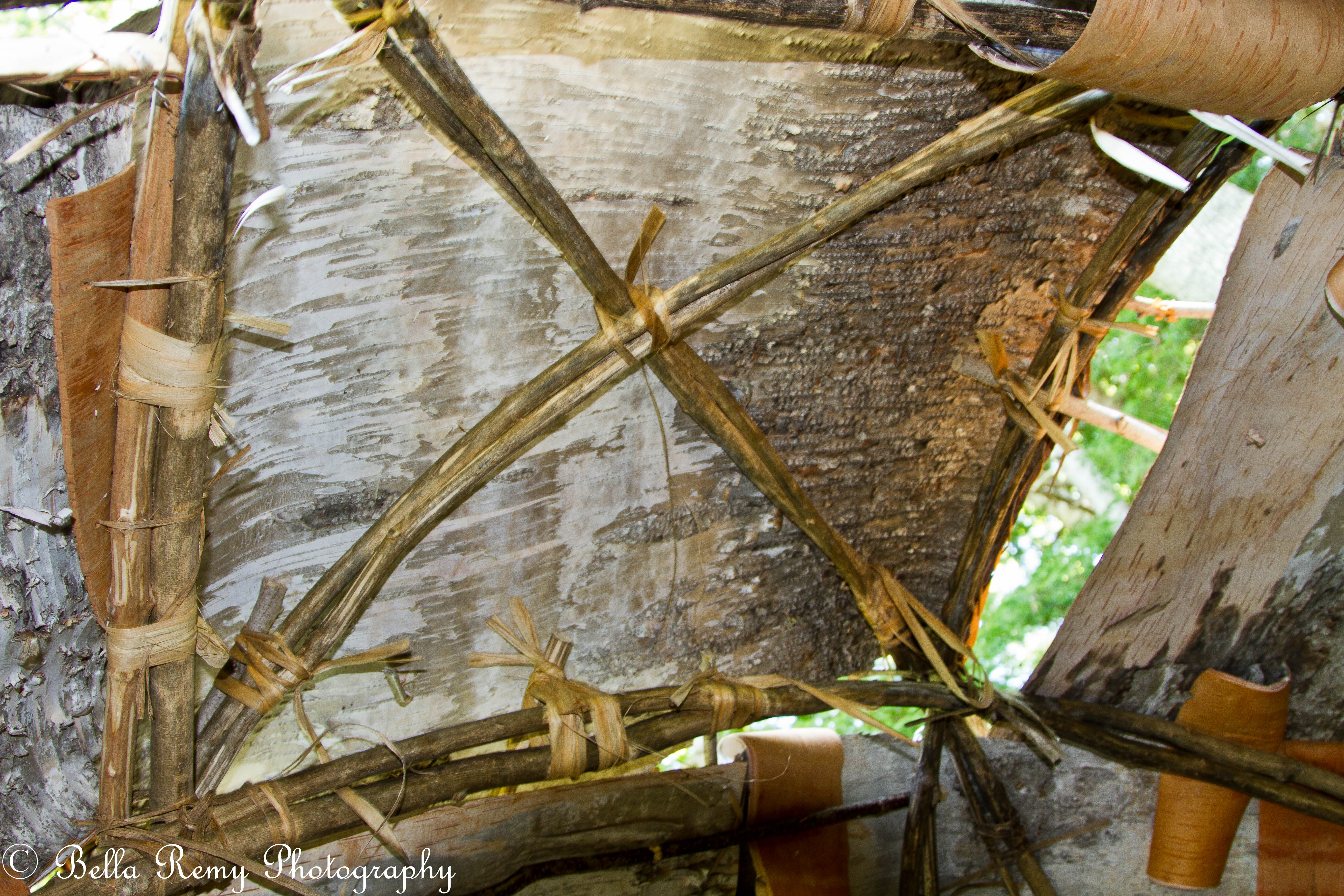
While standing inside the wigwam, thoughts of the lives of the Penobscot Indian tribe in Maine caused the realization of how tough these Indians must have been. While their homes were quite charming, and used resources readily available to them, they provided little shelter from the harsh elements. In particular the deep snows and freezes Maine is so well known for.
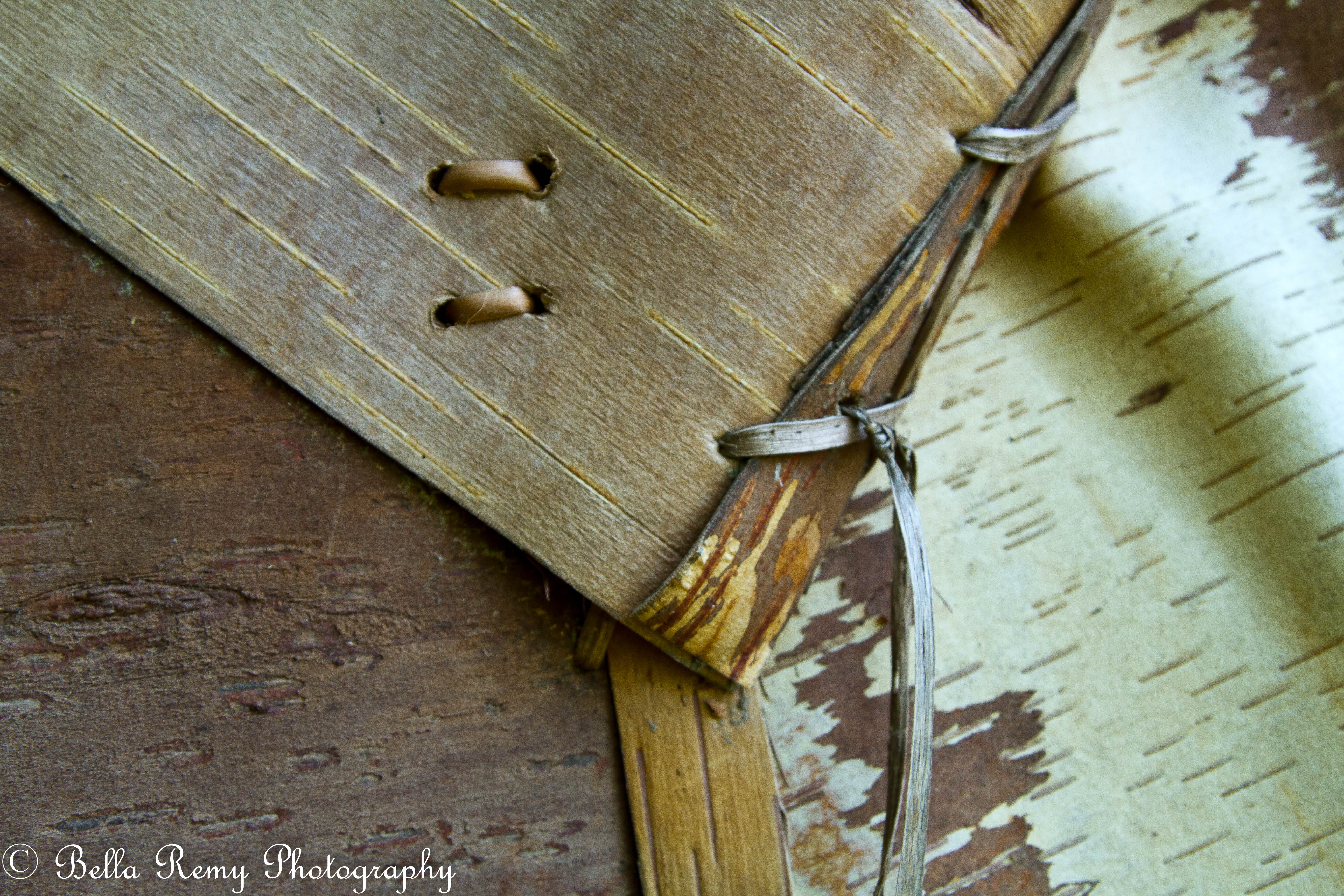
The amount of detail that went into building this wigwam is truly fascinating. The knowledge of how to be able to bend the bark so that it doesn’t break while during construction, and the ability to literally sew the wigwam together is truly an art. This wigwam was built in 2011 with the University of Maine fully documenting the building process for future generations.
Categories: Foot Prints


 Emily Carter ~ Nature as Art
The ventilated hood is real smart, but what about winter isn’t it cold…? 🙂
RIGHT ! That’s what I am so surprised about too seeing how the Wigwams were built. I wonder if they put snow walls around them to make them warmer. I’m sure they had plenty of fur pelts to keep them warmer too.
Sounds very sensible if they might isolate the wind by hanging fur pelts up
– and still let the smoke escape through a vent hole… 😉
🙂
Do you think University of Maine might build Maggie a mini hut to chew on? I’m thinking she might switch from twigs to bark after looking at that beauty you photographed! I better hide your blog from her.
Woof woof
Great article and photos! 🙂
LOL! This would be so perfect for Maggie, a nice doggie home that one can chew on. How awesome !
Great seeing you and hope all is well.
So interested in native americans, and it would be so interesting to be there. But to see this post is the next best thing! 🙂
Thank you so much Bente ! This just whetted my appetite to learn about the Penobscot Indians here in Maine. I hadn’t heard of them until I came across this wigwam today. Happy to share.
This is fascinating to see. What skill and beauty!
Thanks Sharon, I was also amazed about the artmanship of this wigwam.
I love how you go back in time and celebrate our remarkable heritage!